Thursday, 14 February 2013

Breed of the week - Jack Russell Terrier


These lively, alert and active dogs have a keen and intelligent expression. Bold and self-assured at work, jack Russell Terriers have a friendly character, making them excellent companions.


origin: United Kingdom

other name: Jack Russell

morphology : Lupoid
boys and girls: 25 -30 cm, 5-6 kg
grooming: monthly


Jack Russell was the driving force behind the development of the dog that bears his name. Working with a litter of Fox Terriers, he aimed to produce a dog that could run with the hounds before going underground to flush out the fox or vermin. With this in mind, Jack Russell Terriers are robust, active and agile working dogs with a lithe, medium-length body and a big personality. Their lovely movements are matched by a keen expression.


Head: Flat, moderately broad skull, gradually narrowing towards the eyes and tapering to a broad muzzle.
Ears: Button or dropped, good texture, very mobile.
Body: Rectangular.

Tail: May droop at rest, erect in motion.
Colour: Predominantly white with black or tan markings.
Coat: May be smooth, rough or wiry.


Friday, 8 February 2013

Adapting the dog's food (chapter 2)


Nutrition and ageing dogs

Good care is essential if a dog it to remain in good health throughout its life. Regular physical activity will ensure that the dog maintains its muscle mass and controls its weight. The condition of the teeth and the coat should also be mentioned. In terms of energy requirement, intake should be adapted to the animal's activity level, which depends on its age and any health concerns. An arthritic dog will move around less and so expend less energy, putting it at risk of unhealthy weight gain. A low energy diet is only imperative if the dog is overweight. It is very important not to simply assume that reduced enthusiasm for physical exercise is a normal consequence of ageing. The dog must be examined to check whether  it is suffering from a chronic disease. Regular weighing and medical check-ups are the best way to ensure that ageing-related problems are detected at the earliest opportunity.


Ageing is also accompanied by the modification of digestive capacities and particular nutritional requirements, so food for ageing dogs should have the following characteristics:
- higher vitamin C, E content.
- high quality protein
- higher proportion of the trace elements iron, copper, zinc and manganese
- higher quantity of polyunsaturated fatty acids
-slightly higher fibre content to act as "ballast"


As the age dogs suffer from teeth problems, that's why shape, size and hardness of their kibbles must be tailored for their jaw.

A dog that reaches to three quarters of its expected lifespan is regarded as ageing dog. The signs of ageing will start to become more and more apparent and therefore easier to recognise from 12 years for a small dog, 10 years for a medium-sized dog and 8 years foe a large dog. Dietary measures to help combat the signs of ageing need to be intensified when dogs enter this life stage. This will help stay healthy for as long as possible. The following factors are especially important:
- helping to combat cell ageing
- improving immunity and increasing resistance to infection
- combating development of cataracts, degenerative diseases, tumours
- alleviating arthritis


Friday, 1 February 2013

Adapting food to the dog's age


 Growing puppies, adults in the maintenance phase and ageing dogs all have different nutritional requirements. As a consequence, a diet needs to be adapted in every stage of life to ensure the dog remains as healthy as possible.


Whatever the breed, a puppy's requirements in terms of energy, protein, minerals and vitamins are much greater than those of an adult dog. It needs energy and nutrients to maintain its body, but also to grow and build it. Its digestive functions are different to an adult's, too. It is much less able to digest starch, for example. The puppy's teeth (also first teeth) are an important factor that needs to be taken into account when choosing the size, form, hardness of kibbles. The formulation of puppy food must take all of these factors into account. To cover these hefty energy requirements the food must have a high-energy content while concentrations of all other nutrients will also be higher than normal in a specially formulated growth food.


Sunday, 27 January 2013

Did you know? Syberian Husky

Syberian Husky


The breed's ancestors were originally reared by the Chukchi people in Eastern Siberia. Altered by reports of this outstanding sled dog, Americans in Alaska first imported them to the USA in 1909.


Thursday, 24 January 2013

Breed of the week - Siberian Husky

A top dog

Origin: United States
Morphology:
boys - 53 -60 cm, 20 - 27 kg,
girls - 51 - 56 cm, 16 - 23 kg
Grooming - monthly


Siberian Huskies are alert, sociable animals of gentle temperament. They do not share the natural possesive qualities of a guard dog, nor display extreme distrust of strangers, nor assume an agressive attitude among other dogs. Mature dogs are somewhat reserved and dignified. Their intelligence, docility and desire to please make them pleasant companions and willing workers.


Huskies are harmonously proportioned dogs

They are medium sized dogs, with moderately developed bone structure and harmonious proportions. They move very freely. Shape of eyes - almond. Their eyes are slightly oblique, brown, blue are acceptable. What is funny about their eyes that also it is possible for those dogs to have two different eyes.


Characteristic of Siberian Husky


Head: Medium-sized skull in proportion to the body. Slightly rounded at the top.


Ears: Medium-sized, triangular, set close together on top of the head.

Body: Straight and strong, level topline from withers to croup, chest deep and strong.
Tail: Well-furnished, fox brush, set just below the topline.
Colour: Ny, from black to pure white.
Coat: Medium - length double coat, well - furnished but never long enough to obscure the clean lines of the dog.


Monday, 21 January 2013

Adapting the food to the dog's breed (chapter 2)


Predisposition to formation of dental tartar
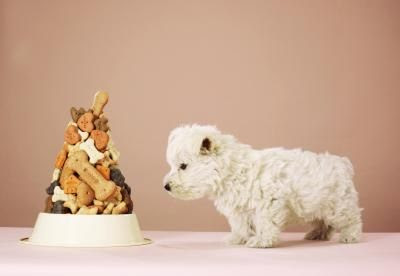

Some dogs with overlapping teeth (including Bulldogs and Pugs) or small jaws ( also Yorkshire Terriers, Shih Tzu) express a natural tendency to produce tartar in the gums and teeth, which causes pain during mastication for the dog and unpleasant effects for the owner (bad breath). After toothbrushing, the most effective way to combat this harmful deposit is through the food (including polyphosphate salts, zinc salts and polyphenols). The same  goes for texture. When kibble texture and ergonomics are right, the dog will bite into them in just the right way to subject its teeth to a light abrasive action.


Special facial morphology

Brachycephalic breeds (including Boxer, Bulldog, Pug) and breeds that have small jaws
  • Yorkshire Terrier 
  • Chihuahua


sometimes find it difficult to grasp their food. Either they are unable to use their incisors properly  or they are unable to keep the food in their mouth. On the other hand, other very large breeds, such as:
  • German Shepherd 
  • Rottweiler, 


have wide jaws.

Adapting the size and shape of kibbles to suit the anatomical characteristics of such dogs ensures they are able to properly grasp, masticate and to digest their food.

Adopting this approach with regard to the form of kibbles for giant breeds also reduces the ingestion of air and slows down consumption, which are two factors that help prevent bloat.

Predisposition to excessive weight gain and its consequences


The well-known gluttonous qualities of such breeds as:
  • Labrador Retriever 
  • Beagle 


predisposes these dogs to weight gain linked to a maintenance energy requirement that is lower than that of most other breeds, which affects
  • Rottweilers 
  • Golden Retrievers
  • Cocker Spaniels. 


This weight gain can be prevented by giving the dog a food with a moderate energy density, so that volume of food ingested can be kept at a comfortable level.
The main visible consequence of excessive weight gain is the appearance of the joint problems that large breeds and all dogs with a natural inclination to corpulence are predisposed to. The introduction of nutrients helps protect the joints.

Many Specific diseases can be prevented 

It is rare to find a breed that is not predisposed to one pathology or other, but it is also rare that  nutrition in unable to prevent or improve these pathologies. Without the enzymes that are needed to transform uric acid to urea, ( for ex. Dalmatians) cannot consume metabolic precursors of uric acid due to the risk of uric acid crystals being deposited in the bladder or joints. It is accordingly easy to understand that sources of purine (a nitrogenous base in DNA) must be avoided in their food by excluding such ingredients as liver, yeasts and meat of young animals, and that this justifies (together with other arguments) the existence of complete foods specially formulated for this breed.